
India's services sector activities touched the highest mark since April 2011 amid ongoing improvements in demand conditions, even as cost pressures in the service economy remained stubbornly high, a monthly survey said on Tuesday. The seasonally adjusted S&P Global India Services PMI Business Activity Index rose from 58.9 in May to 59.2 in June -- its highest mark since April 2011. For the eleventh straight month, the services sector witnessed an expansion in output. In Purchasing Managers' Index (PMI) parlance, a print above 50 means expansion while a score below 50 denotes contraction.

Domestic air passenger traffic touched 1.25 crore in January this year, an increase of 96 per cent compared to the year-ago period, according to rating agency Icra. However, it said the traffic remained around 2 per cent lower compared to the pre-Covid levels -- January 2020. The traffic stood at 64 lakh in January last year. Icra is maintaining a negative outlook on the Indian aviation industry, reflecting the view that the financial performance of Indian airlines is likely to remain under pressure in the near term, even though the recovery in domestic passenger traffic has been healthy.

The automobile sector has started seeing volume growth, the crucial economy segment included. Maruti Suzuki India (MSIL) could be a big beneficiary as the country's largest passenger vehicle (PV) maker has seen several favourable developments including volume recovery. Demand for its new sports utility vehicles (SUVs) appears to be good, and the company has 4 lakh outstanding orders by April 2023, (up from 3.6 lakhs in January 2023). Siam (Society of Indian Automobile Manufacturers) estimates that passenger vehicle demand would grow by 5-7 per cent in the 2023-24 financial year (FY24) and MSIL is likely to beat the market growth.

'It will send a very strong signal that it is now our time to grow.'

Four companies - Rajesh Exports, Hyundai Global Motors Company, Ola Electric Mobility and Reliance New Energy - are eligible for receiving benefits under the production-linked incentive (PLI) scheme for advanced chemistry cell battery storage, the heavy industries ministry said on Thursday. The allotment was made for a total of 50 GWh of battery capacity to the four successful bidders. These firms, the ministry said, will receive incentives under India's Rs 18,100 crore programme to boost local battery cell production.

Although India's share in the world toy trade has marginally improved, it still lags behind China's. Toys are not China's main item of export, but about two-thirds of the toys sold globally are from China. The world exported toys worth $73.2 billion in 2021: China accounted for 66.2 per cent, or $48.5 billion of that, out of which mainland China made up $46.1 billion and Hong Kong $2.4 billion.

'The power sector accounts for much of the financial burden of state governments in India.'

India's climate change goals are turning combustible. On the one hand, a protracted dispute between the government and manufacturers over subsidies threatens to slow the pace of electric vehicle (EV) sales. On the other hand, repeated assertions by different arms of the government over banning sales of new fossil fuel-fired vehicles have queered the pitch for energy investments. Before we address the issue of the recommended diesel vehicle ban in the recent report on energy transition, issued months before the next round of global climate talks begin in Dubai in November, let's look at what's at stake.

Taxing the rich will fetch nothing; only votes, argues Debashis Basu.

Hit by Covid waves and slowdown, the Indian Railways has still not been able to return to its pre-pandemic passenger traffic, data by ministry of Railways has revealed. In February, the national transporter received 413 million ticket bookings - 43 per cent higher than the previous year, but only 61 per cent of the 675 million in February 2020. According to the statistics, that was the last time the Railways saw more than 500 million bookings in a single month.
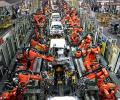
India's economy grew 6.1 per cent in the fourth quarter of 2022-23, pushing up the annual growth rate to 7.2 per cent, official data showed on Wednesday.

Maruti's strategy for the SUV segment is to arrest the decline in customers for entry level hatchbacks.
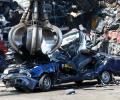
One of the challenges for those car graves is that Indian owners often find markets for their old cars rather than send them to scrapyards.

ITC's results for the January-March quarter (Q4) were strong, with robust growth in the fast-moving consumer goods (FMCG) segment and a good performance in hospitality. The tobacco division's performance was on expected lines, with double-digit volume growth, helped by reclaiming of market share from the smuggled trade. There was 60 per cent growth in non-cigarette earnings before interest and tax (Ebit), despite a relatively weak performance in paperboards.

Listed companies' net profit as a percentage of gross domestic product (GDP) has hit a decadal high and is expected to edge even higher over the next two financial years. According to an analysis by ICICI Securities, India's Inc net profit stood at Rs 8.4 trillion, or 4 per cent of GDP of Rs 210 trillion for the trailing 12-month period ending September. This is the highest since financial year 2011-12 (FY12), when it was at 4.6 per cent.

India's largest cement firm, Ultratech Cement, has joined the race to acquire the Holcim stake in Ambuja Cements and its subsidiary, ACC. UltraTech - part of the Aditya Birla Group - submitted a non-binding bid on Wednesday. Swiss multinational Holcim, which manufactures building material, is exiting India by selling its 63.19% stake in Ambuja Cements. According to banking sources, UltraTech has submitted a plan to Holcim, outlining divestiture details that would meet the norms set by anti-trust body Competition Commission of India.

The production of Covaxin will increase from the current 10 million doses per month to 60 million-70 million by July-August.
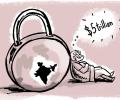
Chief Economic Advisor V Anantha Nageswaran on Thursday expressed hope that the economy will maintain the trend growth rate of 6.5 per cent and above for the rest of the years in the current decade. The economy will close the current fiscal logging in a growth of 6.5-7 per cent, he said, citing the projections of private sector analysts, Reserve Bank of India (RBI) and international agencies like OECD and the IMF. "This appears to be reasonable at this point in time although we will get the data on the fiscal second quarter in a few days, which will give more clarity on these numbers.

The third-quarter financials didn't excite market watchers. But equity investors can still make money if they invest in the right stocks.

India's economic image is not affected due to Adani Group's recent decision to pull out Rs 20,000 crore FPO (follow-on public offers) amid allegations of financial wrongdoings, Finance Minister Nirmala Sitharaman said on Saturday.
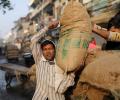
Clawing the economy back to an 8 per cent growth path will require bringing savings and investment rates closer to 35 per cent on a sustained basis, which were 30.2 and 29.6 per cent, respectively, in FY22, according to a report. As per India Ratings, a large part of investments will have to be in infrastructure, which can help revive private investments by easing supply constraints and offset the weakening of external demand due to global headwinds. Higher investments will have to be accompanied by higher domestic savings to keep the savings-investments gap under check.

Finance Minister Nirmala Sitharaman will have to do a tight-rope walk between staying fiscally prudent and general public expectations of lower taxes and a wider social security net, while at the same time firing the engines of the economy before general elections. Sitharaman will on Wednesday present her fifth straight Budget at a time when the economy is slowing due to global headwinds and specific sectors need attention. In the run-up to the Budget presentation, expectations are rife that she may tweak income-tax slabs to provide relief to the middle class and increase spending on the poor through programmes such as the rural job scheme while ramping up financial incentives for local manufacturing.

In the early part of 1800, a 30-acre plot next to Fort Gloster on the banks of river Hooghly in Howrah district of Bengal was the nerve centre of industrial activity; it housed India's first steam-powered cotton mill, Bowreah Mills, which was set up by a British merchant and went on to become a hub of factories - a rum distillery, foundry, cotton yarn factory, an oil mill and a paper mill, et al. Spearheaded by Dwarkanath Tagore, the industrialist grandfather of Rabindranath Tagore, the commercial complex was possibly the first of its kind in the country. Close to 200 years later, after much ebb and flow of history, the hub is set for a resurgence of sorts.

There is a need to have a 'CEO for Mumbai' in order to realise the ambition of making it a global financial centre.

Parliament has cleared the Mines and Minerals (Development and Regulation) Amendment Bill, 2023, recently. The objective of the Act is to invite investments from the private sector, including foreign companies, for mining minerals such as lithium and other critical minerals. Other than lithium, some of these minerals were classified as atomic minerals, including beryl and beryllium, niobium, titanium, tantalum and zirconium.

India's plan to produce ethanol from second-generation (2G) sources -- mainly farm waste -- is taking time to materialise even as the government is set to dedicate to the nation on Wednesday a Rs 900-crore plant set up by Indian Oil Corporation (IOC) in Panipat. Though state-run oil companies had decided to set up at least 12 plants in 2016-17 with an investment of around Rs 10,000 crore, this will be the first unit coming on track while others are stuck in various stages owing to issues like capital expenditure, lack of feedstock, and high rates of finished products compared to traditional ethanol units. According to industry sources, three more second-generation plants are coming up.

He also said that terrorists are constantly finding new ways to carry out violence, radicalise youth and raise financial resources and the darknet is being used by terrorists to spread radical content and conceal their identities.

Larger firms feel that the smaller players have muddied the waters for the IBC process, leading to excessive regulation of resolution Professionals.

English Premier League club, Tottenham Hotspur, are understood to be considering another offer for Welsh striker Gareth Bale, with the club angry at Spanish giants Real Madrid's arrogance. According to Sky Sports, a mystery offer has been received by the club, which is being taken as a counter-bid.
English Premier League club, Tottenham Hotspur, are understood to be considering another offer for Welsh striker Gareth Bale, with the club angry at Spanish giants Real Madrid's arrogance. According to Sky Sports, a mystery offer has been received by the club, which is being taken as a counter-bid.

He joined Derby in a player-coach capacity in 2020 before being named manager the following year.

Even as India's passenger-vehicle sales touched a record high of 3.9 million units in 2022-23, growing 27 per cent over the previous financial year, the country's largest carmaker, Maruti Suzuki India (MSIL), said on Monday uncertainties in the electronic-component supplies might affect production in FY24. MSIL said the shortage of electronic components had some impact on production in FY23. "The company took all possible measures to minimise the impact.

In the first major exercise of empowering the central public sector enterprises since the formulation of the 'Navratna' scheme in 1997, the government on Monday doubled their capacity to invest in joint ventures and incur capital expenditure.
A hotel in 1975, entry into paperboards in 1979, India's dominant cigarette maker, ITC, read the tea - or tobacco - leaves early, leveraged its enterprise strengths and stepped up the diversification agenda to create multiple drivers of growth. Some failed, some faltered, some were transformational, adding steadily to the top line. Now those efforts are making a difference: margins from non-cigarettes - FMCG, hotels, agri, paperboards, paper and packaging - are expanding and profits are kicking in more significantly than ever before.

Year by year, our cities remain defeated in the face of weather conditions, costing us time, money, resources and often lives, observe Amit Kapoor and Bibek Debroy.

Banks do extensive investigation before declaring an account fraud; they owe it to us as they deal with our money. Why would they try to fix an innocent borrower? asks Tamal Bandyopadhyay.

The stellar rise in corporate earnings in financial year 2021-22 (FY21) and FY22 did not result in a corresponding boom in capital expenditure (capex), with listed companies' investment in fixed assets rising just 2.3 per cent year-on-year (YoY) in FY22, growing at the slowest pace in the last six years. In comparison, the firms' combined net profit jumped 63.5 per cent YoY in FY22, while net sales increased 31.1 per cent - the fastest pace in over a decade. The 955 non-financial companies in Business Standard's sample reported combined net profit of Rs 7.18 trillion in FY22, compared with Rs 4.39 trillion in FY21 and Rs 2.59 trillion in FY20.

The implementation of the five 'guarantees' announced by the Congress may cost the state exchequer an estimated Rs 50,000 crore annually.

So far, the drones that were considered important for the agriculture sector were nature-made winged-insects - a key component of the bee-based natural pollination cycle. The new-age drone is a whirring machine with rotors that can help farmers plan and grow and manage their crops. For the farm sector in India, which has had low levels of mechanisation, the impact of drones can be tremendous. The use of drones can help it leapfrog to modernisation in the same way that mobile phones helped India overcome its traditional lack of connectivity.

'It will be important strategically and geographically because there is no port in India which is as close to the international shipping route as Vizhinjam.'
